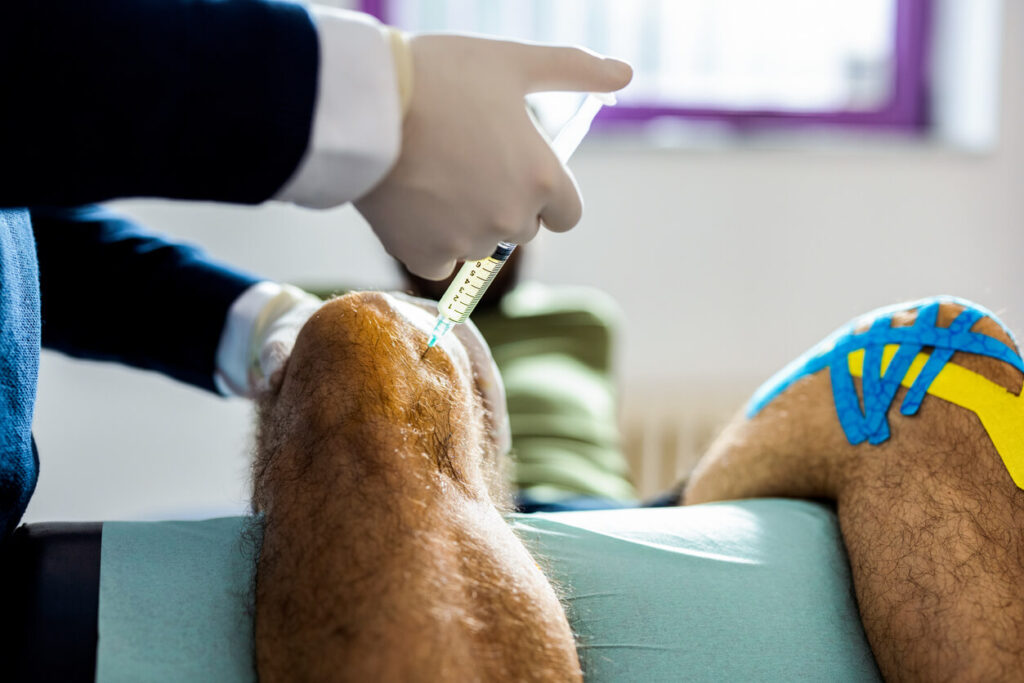
Overview of PRP for Sports Injuries
PRP for sports injuries is a biologic treatment that uses a concentrated portion of a patient’s own blood to promote healing in damaged muscles, tendons, and ligaments. The therapy works by isolating platelets that contain growth factors responsible for tissue repair and regeneration. Athletes and active individuals often deal with injuries caused by repetitive stress, sudden impact, or overuse, making PRP a supportive option in selected cases. This approach is widely used in sports medicine because it focuses on enhancing natural healing rather than simply masking symptoms. PRP for sports injuries is considered minimally invasive and is often used when conservative treatments have not been fully effective. It is commonly integrated into rehabilitation programs that include physical therapy and gradual return to activity. Its use continues to grow as regenerative medicine becomes more widely adopted in clinical practice.
Conditions commonly treated
PRP for sports injuries is often used for soft tissue conditions that respond slowly to traditional care. These injuries are common in both recreational and professional athletes.
- Chronic tendon inflammation and degeneration
- Ligament sprains and partial tears
- Muscle strains from repetitive stress or overload
- Joint irritation from repeated movement
- Long-term sports-related soft tissue pain
These conditions often require more than rest alone to improve. PRP for sports injuries is particularly helpful in areas with limited blood supply where healing is naturally slower.
How PRP for Sports Injuries Works in the Body
PRP for sports injuries works by delivering concentrated platelets directly into damaged tissue. These platelets release growth factors that signal the body to begin repair processes. Once activated, the body responds by increasing collagen production, improving blood flow, and stimulating tissue regeneration. The goal is to enhance the body’s natural healing response rather than replace it. This places PRP within the field of regenerative medicine. The effectiveness of treatment depends on proper preparation and accurate injection into the injured area.
Biological healing response
The healing process activated by PRP for sports injuries involves multiple growth factors working together to restore damaged tissue.
- Platelet-derived growth factor supports cell growth and repair
- Transforming growth factor assists tissue remodeling
- Vascular endothelial growth factor improves circulation
- Fibroblast activity strengthens connective tissue
- Natural anti-inflammatory effects help control prolonged swelling
These biological processes work together to support gradual recovery. PRP for sports injuries does not produce immediate results but encourages long-term healing.
Sports Injuries Commonly Treated with PRP for Sports Injuries
PRP for sports injuries is widely used in orthopedic and athletic care for a variety of conditions. These injuries often result from repetitive movement, strain, or physical impact. The treatment is commonly recommended when standard care methods are not enough to resolve symptoms. It is used for both upper and lower body injuries depending on the condition. Each case is evaluated individually to determine suitability.
Common treatment areas
PRP for sports injuries is often applied to injuries that affect mobility, strength, and performance.
- Shoulder injuries such as rotator cuff irritation
- Knee conditions including patellar tendon inflammation
- Elbow strain related to repetitive motion
- Achilles tendon injuries in runners and athletes
- Hamstring and quadriceps muscle injuries
These injuries can significantly affect physical activity. PRP for sports injuries is often included in structured rehabilitation programs to support recovery.
PRP Procedure for Sports Injuries
The process of PRP for sports injuries begins with a clinical evaluation to confirm suitability. A small blood sample is collected from the patient and processed using a centrifuge machine. This separates platelet-rich plasma from other components of the blood. The concentrated plasma is then injected into the injured area using precise medical guidance. Imaging tools such as ultrasound may be used to improve accuracy. The procedure is typically performed in an outpatient setting. Most patients return home shortly after treatment.
Treatment process steps
The procedure follows a structured medical approach designed for safety and effectiveness.
- Blood collection from the patient
- Centrifugation to isolate platelets
- Preparation of concentrated plasma
- Injection into the targeted injury site
- Post-treatment observation and instructions
Each step contributes to treatment quality. PRP for sports injuries relies heavily on proper technique and clinical precision.
Recovery After PRP for Sports Injuries
Recovery following PRP for sports injuries is gradual and varies depending on the condition treated. Some patients experience mild soreness or swelling after injection, which is part of the healing response. Over time, the body begins repairing damaged tissue through increased cellular activity. Improvement is typically seen over several weeks or months. Physical therapy is often recommended to support recovery and restore function. Controlled activity helps prevent reinjury during healing. The process is progressive rather than immediate.
Healing progression stages
Recovery from PRP for sports injuries typically follows a structured pattern.
- Mild soreness or inflammation after injection
- Activation of tissue repair mechanisms
- Gradual reduction in pain and stiffness
- Improved mobility and strength
- Return to controlled physical activity
These stages help guide recovery expectations. PRP for sports injuries works best when combined with rehabilitation programs.
Benefits of PRP for Sports Injuries
PRP for sports injuries offers several advantages for individuals seeking non-surgical treatment options. It uses the patient’s own biological material, reducing the risk of allergic reactions. The therapy supports natural healing processes instead of simply masking symptoms. It is minimally invasive compared to surgical procedures. Many patients choose it when other treatments have not been fully effective. Its regenerative focus makes it an important option in sports medicine.
Key benefits
PRP for sports injuries provides several clinically relevant advantages.
- Enhances natural tissue repair
- Minimally invasive treatment option
- Uses patient’s own blood components
- Supports tendon and ligament healing
- May reduce long-term discomfort
These benefits make PRP for sports injuries a valuable part of rehabilitation strategies.
Limitations of PRP for Sports Injuries
PRP for sports injuries is not suitable for every condition. Some injuries respond better than others depending on severity and duration. There is no universal standard for preparation protocols, which can lead to variability in outcomes. Insurance coverage is often limited. Results may take time and vary between individuals. It is not intended as a quick solution.
Key limitations
- Variable outcomes depending on injury type
- May require multiple sessions
- Lack of standardized protocols
- Not suitable for all conditions
- Requires rehabilitation commitment
PRP for sports injuries should be considered as part of a broader treatment plan.
Ideal Candidates for PRP for Sports Injuries
PRP for sports injuries is typically recommended for individuals with chronic or persistent soft tissue injuries. It is often used when conservative treatments have not provided sufficient improvement. Athletes and active individuals are common candidates. It is also considered for patients seeking alternatives to surgery. Proper medical evaluation is required before treatment. Each case is assessed individually.
Suitable candidates
PRP for sports injuries may be appropriate for individuals with:
- Chronic tendon pain or degeneration
- Repetitive strain injuries
- Persistent joint discomfort
- Desire to avoid surgery
- Poor response to standard therapy
Comparison with Other Treatments
PRP for sports injuries is often compared with other treatment options used in sports medicine. Corticosteroid injections reduce inflammation but do not repair tissue. Physical therapy improves strength and mobility but may not directly accelerate healing. Surgery is used for severe injuries but involves longer recovery. PRP focuses on biological repair and tissue regeneration.
Treatment comparisons
- PRP supports tissue healing
- Steroid injections reduce inflammation
- Physical therapy restores function
- Surgery repairs structural damage
- Regenerative therapy enhances healing potential
PRP for sports injuries is often combined with rehabilitation for best results.
Risks and Side Effects
PRP for sports injuries is generally safe because it uses the patient’s own blood. Side effects are usually mild and temporary. Serious complications are rare when performed correctly. Proper sterile technique reduces risks significantly.
Possible side effects
- Mild swelling at injection site
- Temporary soreness
- Light bruising
- Short-term inflammation
- Rare infection risk
Cost Factors of PRP for Sports Injuries
The cost of PRP for sports injuries varies depending on several factors. These include clinic location, provider expertise, and treatment complexity. Some patients may need multiple sessions. Insurance coverage is often limited. Costs differ between providers.
Cost influences
- Number of treatment sessions
- Type of injury
- Use of imaging guidance
- Clinic location
- Provider experience
Scientific Research and Clinical Use
PRP for sports injuries continues to be studied in orthopedic and sports medicine research. Evidence shows promising results for tendon-related conditions. Results for other injuries are mixed. Differences in preparation methods affect outcomes. Research is ongoing to improve standardization.
Research findings
- Strong support for tendon healing
- Mixed results for ligament injuries
- Growing clinical adoption
- Need for standardized protocols
- Continued regenerative medicine research
Recovery Optimization After PRP for Sports Injuries
Recovery after PRP for sports injuries can be improved through structured rehabilitation. Physical therapy helps restore strength and mobility. Nutrition supports tissue repair. Rest and controlled activity help prevent reinjury. Medical guidance is essential for safe recovery.
Recovery strategies
- Physical therapy programs
- Balanced nutrition
- Gradual return to activity
- Adequate rest
- Monitoring of symptoms
Frequently Asked Questions
What is PRP for sports injuries used for
PRP for sports injuries is used to treat tendon, ligament, and muscle injuries by promoting natural healing.
How long does recovery take
Recovery varies from weeks to months depending on injury severity.
Is the procedure painful
Most patients experience mild discomfort that resolves quickly.
How many treatments are needed
Some patients need one session, while others require multiple treatments.
Can PRP replace surgery
It may reduce the need for surgery in some cases but not all.
Takeaway
PRP for sports injuries is a regenerative treatment that supports the body’s natural healing process for muscle, tendon, and ligament injuries. It is widely used in sports medicine as a non-surgical option that enhances tissue repair. Its effectiveness depends on proper diagnosis, treatment technique, and rehabilitation adherence.