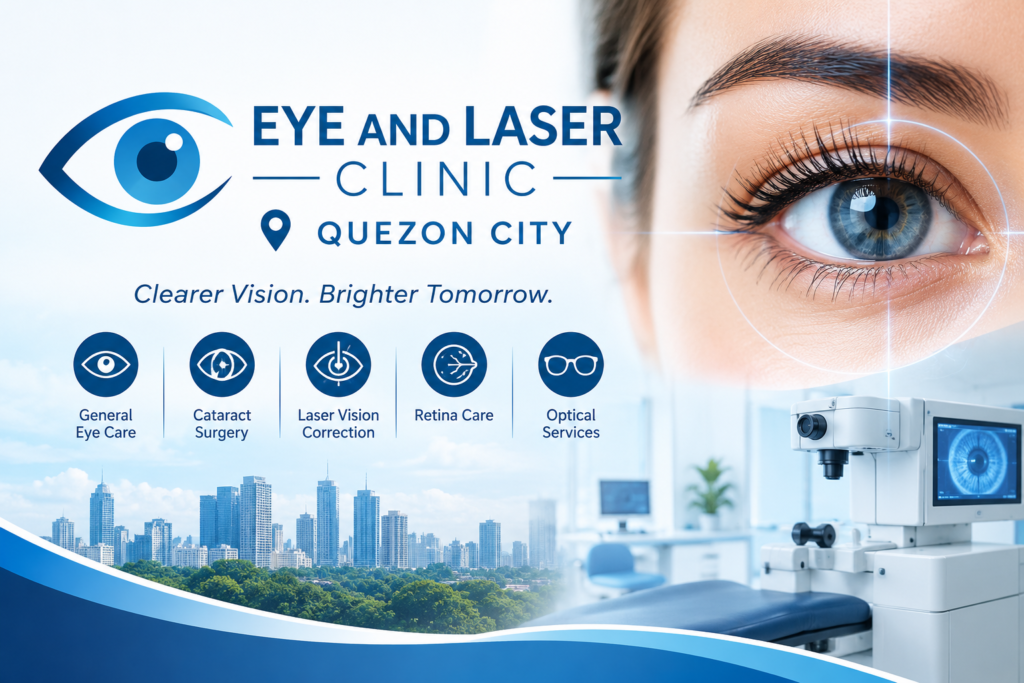
Healthy eyesight is essential for completing everyday tasks comfortably and confidently. From reading and working to driving and using digital devices, clear vision affects many aspects of modern life. When vision changes or eye discomfort develops, consulting a qualified eye specialist can help determine the underlying concern. An Eye and Laser Clinic Quezon City can provide patients with access to professional eye examinations, diagnostic technologies, ophthalmology consultations, and selected laser-based treatments. Depending on the facility, patients may receive services for refractive errors, cataracts, glaucoma, retinal conditions, corneal concerns, and other eye-related problems. Some specialized facilities also provide laser vision correction for appropriately screened candidates who want to reduce their dependence on glasses or contact lenses. Understanding the services and factors involved in choosing an eye clinic can help patients make more informed decisions about their vision and long-term eye health.
The Role of Specialized Eye Care
Specialized eye care goes beyond determining whether someone needs a stronger pair of glasses. Ophthalmologists are trained to evaluate the health and function of the eyes and can investigate symptoms that may have different possible causes. A patient experiencing blurred vision, headaches, glare, floaters, or difficulty seeing at night may require a comprehensive examination rather than a simple vision check. An eye specialist can assess the different structures of the eye and determine whether further diagnostic testing is necessary. Depending on the findings, treatment may involve corrective lenses, medication, monitoring, laser therapy, or surgery. An Eye and Laser Clinic Quezon City can be particularly useful for patients looking for both general ophthalmic evaluation and access to specialized laser-related services. Choosing a facility with appropriate specialists and diagnostic capabilities can support a more thorough approach to eye care.
Comprehensive Eye Examinations
A comprehensive eye examination can provide valuable information about both vision and ocular health. The process often begins with a discussion of symptoms, medical history, family history, medications, and previous eye procedures. Visual acuity testing helps determine how clearly a person can see at different distances. Refraction testing can identify whether nearsightedness, farsightedness, or astigmatism is contributing to blurry vision. Depending on the patient’s age, symptoms, and risk factors, the ophthalmologist may perform additional examinations involving eye pressure, the retina, optic nerve, or cornea. More advanced tests may be recommended when the specialist needs detailed information about specific structures. Regular examinations are particularly important for people with known eye conditions or health factors that may increase their risk of vision problems.
Eye Conditions Commonly Evaluated by Specialists
Eye clinics can evaluate many different conditions that affect vision and ocular health. Refractive errors are among the most common concerns and include nearsightedness, farsightedness, and astigmatism. Presbyopia can develop with age and may make close-up activities such as reading increasingly difficult. Cataracts can gradually reduce clarity and may cause glare or difficulty seeing in low-light conditions. Glaucoma can affect the optic nerve and may require ongoing monitoring even when noticeable symptoms are limited. Retinal conditions can also affect central or peripheral vision and may require specialized imaging or treatment. Because several eye conditions can produce similar symptoms, professional examination is important for identifying the appropriate cause and treatment strategy.
Diagnostic Technology in Modern Eye Clinics
Technology has become an important part of modern ophthalmology because detailed measurements and imaging can help specialists evaluate eye structures more effectively. Optical coherence tomography, commonly known as OCT, can produce detailed images that assist in evaluating the retina and optic nerve. Visual field testing can assess peripheral vision and may provide useful information when evaluating certain optic nerve conditions. Fundus photography can document structures at the back of the eye for assessment and future comparison. Pachymetry can measure corneal thickness and may be relevant to particular examinations and refractive surgery evaluations. Some specialized facilities in Quezon City offer these diagnostic technologies along with laser-based services. Capitol Medical Center’s Eye Center, for example, lists OCT, pachymetry, fundus imaging, visual field testing, and multiple laser procedures among its eye-care services. (capitolmedical.com.ph)
Exploring Laser Vision Correction
Laser vision correction is an option that some patients consider when they want to reduce their dependence on glasses or contact lenses. LASIK is one of the most widely recognized procedures, while PRK and other refractive techniques may also be available. These procedures are designed for selected refractive errors, but they are not suitable for every patient. An ophthalmologist must assess factors such as corneal shape, corneal thickness, prescription, eye health, and other individual considerations before recommending treatment. Patients should understand that laser vision correction is different from laser procedures used to treat certain eye diseases. A consultation can help clarify whether a person is a suitable candidate and which options may be available. St. Luke’s Vision Laser Service in Quezon City lists femtosecond bladeless LASIK and surface ablation procedures such as PRK among its refractive services. (stlukes.com.ph)
Laser Treatments for Specific Eye Conditions
Laser technology has applications beyond refractive surgery. Ophthalmologists may recommend therapeutic laser procedures for specific conditions after performing an appropriate evaluation. Certain YAG laser procedures can be used for particular postoperative or other ophthalmic indications. Retinal laser treatment may also be considered for selected retinal conditions when a specialist determines that it is clinically appropriate. Laser iridotomy is another procedure that may be recommended for certain patients based on their eye anatomy and risk factors. The purpose and technique of each laser treatment can differ substantially, so patients should ask their ophthalmologist to explain the specific procedure being recommended. Facilities in Quezon City may offer different combinations of therapeutic laser services depending on their specialists and equipment. Understanding the reason for a laser procedure can help patients approach treatment with realistic expectations.
Selecting an Eye and Laser Clinic in Quezon City
Finding an Eye and Laser Clinic Quezon City should involve more than searching for the nearest facility. The qualifications and specialization of the ophthalmologist should be among the first considerations. Patients should determine whether the clinic provides the diagnostic services required for their particular concern. Those interested in refractive surgery should also ask whether the clinic performs comprehensive screening before recommending a procedure. Clear communication about treatment benefits, risks, alternatives, recovery, and follow-up is another important factor. Patients may also want to consider whether the clinic is convenient to reach because eye treatments can require multiple appointments. A facility that combines appropriate expertise, diagnostic capability, patient communication, and follow-up support may offer a more complete healthcare experience.
What to Expect During Your First Appointment
Knowing what to expect can make an eye-care appointment less stressful. The ophthalmologist may begin by asking about changes in vision, symptoms, previous treatments, and relevant medical conditions. Vision testing can then help determine whether refractive errors are affecting visual clarity. Additional examination may be performed to evaluate the health of the eyes and identify any signs that require closer attention. Patients considering laser treatment may undergo additional measurements to determine whether they are suitable candidates. The specialist should explain the findings and discuss treatment options when appropriate. Patients should feel comfortable asking questions if they do not understand a diagnosis, recommended test, procedure, or expected outcome.
Preparing for Laser Vision Assessment
Patients who are considering laser vision correction may need to complete several assessments before a treatment decision can be made. Accurate information about previous eye problems, surgeries, medications, and contact lens use should be provided to the ophthalmologist. Contact lens wearers may be instructed to stop using lenses for a certain period before measurements, depending on the type of lens and examination. Patients should follow all instructions provided by their clinic to ensure that the evaluation is as accurate as possible. It is also useful to prepare a list of questions about candidacy, procedure options, recovery, possible complications, and costs. Patients should understand that being interested in laser vision correction does not necessarily mean that treatment will be recommended. The final decision should be based on professional examination and individualized clinical assessment.
Recovery and Post-Treatment Eye Care
Post-treatment care can be an important part of achieving the best possible outcome after an eye procedure. Recovery expectations depend on the specific procedure, the patient’s individual eye health, and the recommendations of the treating ophthalmologist. Patients may receive prescription eye drops or other medications that should be used according to the provided instructions. Follow-up visits allow the specialist to monitor healing and assess changes in vision. Patients may also receive temporary restrictions involving exercise, swimming, eye rubbing, or other activities depending on the treatment. Any unexpected or worsening symptoms should be reported promptly to the treating eye-care provider. Following postoperative instructions carefully can help support proper healing and allow potential concerns to be addressed as early as possible.
The Importance of Personalized Eye Care
No two patients have exactly the same eye health, medical history, or vision needs. A treatment that is appropriate for one person may not be suitable for another person with a different prescription, corneal condition, or medical history. Personalized assessment is therefore particularly important when considering laser procedures. An ophthalmologist can use examination findings and diagnostic measurements to determine which treatment options are reasonable for an individual patient. Patients should be encouraged to ask about alternatives if they are uncertain about a recommended procedure. Professional guidance can also help prevent unrealistic expectations about what laser treatment can achieve. The focus should always remain on appropriate eye care and patient safety rather than simply choosing the newest or most heavily promoted treatment.
Questions to Consider Before Choosing a Clinic
Patients can make better decisions by preparing questions before visiting an eye clinic. They can ask about the ophthalmologist’s qualifications, specialization, and experience with their particular concern. It is also useful to ask what diagnostic tests may be required and whether these tests are performed within the same facility. Patients considering laser treatment should ask why a particular procedure is being recommended and whether other options are available. Questions about recovery, possible side effects, follow-up appointments, and activity restrictions can help patients prepare for treatment. Cost questions should cover the consultation, diagnostic tests, procedure, medications, and follow-up services where applicable. Taking the time to obtain clear answers can help patients compare providers based on quality and suitability of care.
FAQ About Eye and Laser Clinic Quezon City
What is an Eye and Laser Clinic Quezon City?
An Eye and Laser Clinic Quezon City is a specialized eye-care facility that may provide ophthalmology consultations, comprehensive eye examinations, diagnostic testing, and laser-related treatments. The exact services vary by clinic. Patients should confirm available services with the facility before making an appointment.
What conditions can an eye specialist evaluate?
An ophthalmologist can evaluate refractive errors, cataracts, glaucoma, retinal conditions, corneal problems, and many other eye concerns. The specific services depend on the specialist and facility. Additional diagnostic testing may be recommended when necessary.
Is LASIK available in Quezon City?
Some specialized facilities in Quezon City offer LASIK and other refractive procedures. St. Luke’s Vision Laser Service, for example, lists femtosecond bladeless LASIK among its refractive services. (stlukes.com.ph) Patients should undergo an appropriate evaluation before determining whether they are candidates.
Does laser treatment always correct vision?
No. Different laser procedures have different purposes. Some are designed to correct refractive errors, while others may be used for selected retinal, glaucoma-related, or postoperative conditions.
How do I know whether I need laser eye treatment?
The need for laser treatment can only be determined after an appropriate eye examination. An ophthalmologist can evaluate your eye health, symptoms, measurements, and treatment goals before discussing suitable options.
What should I look for when selecting an eye clinic?
Look for qualified ophthalmologists, appropriate diagnostic technology, relevant treatment options, clear communication, and reliable follow-up care. Accessibility and appointment availability can also be considered. Patients should verify current services and credentials directly with the facility.
How long does recovery from laser eye treatment take?
Recovery depends on the specific procedure and individual patient. LASIK, PRK, and therapeutic laser procedures can have different recovery expectations. The treating ophthalmologist should provide procedure-specific instructions and timelines.
Are regular eye examinations still needed after laser vision correction?
Yes. Laser vision correction does not eliminate the possibility of developing other eye conditions or age-related changes in vision. Continued professional eye examinations remain important for maintaining long-term eye health.
Takeaway
Choosing an Eye and Laser Clinic Quezon City is an important decision for anyone seeking professional vision care or considering laser treatment. Patients should look for qualified ophthalmologists, appropriate diagnostic capabilities, modern technology, individualized treatment planning, and dependable follow-up services. Laser procedures can serve different purposes, so understanding the difference between refractive surgery and therapeutic laser treatment is essential. A comprehensive examination should always come before deciding whether a particular procedure is appropriate. Patients can also improve their experience by asking questions about treatment alternatives, potential risks, recovery, costs, and ongoing care. The right eye-care provider should prioritize the patient’s individual eye health rather than promoting a single treatment for everyone. With professional evaluation and consistent eye care, patients can make better-informed choices that support clearer vision and long-term ocular health.