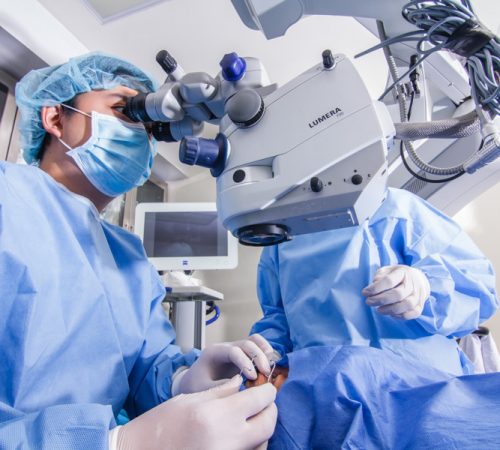
Nearsightedness, or myopia, affects millions of people, making daily tasks like reading signs, driving, or enjoying sports more challenging. Many rely on glasses or contact lenses to see clearly, but these are temporary solutions that require constant maintenance. Phakic IOL offers a permanent approach to correcting nearsightedness, providing clear vision without the need for corrective eyewear. Peregrine Eye and Laser Institute, with its world-class facilities across Makati, Manila, and Quezon City, specializes in this advanced procedure, delivering safe and effective results for patients of all ages.
Phakic IOL has become a trusted solution for individuals seeking a long-term option for nearsightedness. Unlike traditional methods like LASIK, it preserves the eye’s natural lens while correcting refractive errors. This article explains what Phakic IOL is, how it works, who can benefit, and why Peregrine Eye and Laser Institute is a leading provider of this treatment in the Philippines.
What is a Phakic IOL?
A Phakic Intraocular Lens (IOL) is a specialized lens implanted into the eye to correct nearsightedness while keeping the natural lens intact. The term “phakic” refers to the presence of the eye’s natural lens, distinguishing it from pseudophakic IOL, which is implanted after cataract surgery when the natural lens has been removed.
Phakic IOL is designed for individuals with moderate to high myopia who are seeking a permanent solution. Unlike glasses or contact lenses that merely adjust the focus externally, this lens works inside the eye to provide sharper and more reliable vision. Patients who undergo this procedure often experience freedom from corrective lenses and a significant improvement in visual clarity.
The lens can be placed either in front of or behind the iris, depending on the patient’s eye anatomy and the surgeon’s recommendation. Phakic IOL is made from biocompatible materials such as silicone or plastic, ensuring that it integrates safely with the eye and reduces the risk of complications.
How Phakic IOL Works
Phakic IOL corrects vision by addressing the eye’s refractive errors. Refractive errors occur when the eye does not bend light properly onto the retina, resulting in blurred or out-of-focus images. Nearsighted individuals have eyes that focus light in front of the retina rather than directly on it, causing distant objects to appear blurry.
During the procedure, a small incision is made in the front of the eye, and the Phakic IOL is carefully inserted. The lens is then positioned in a precise location either behind or in front of the iris. Once in place, the Phakic IOL alters the path of incoming light, allowing it to focus accurately on the retina. This process restores clear vision and reduces or eliminates dependence on glasses and contact lenses.
Phakic IOL offers advantages over other vision correction methods. Unlike LASIK, which reshapes the cornea, Phakic IOL does not remove any corneal tissue. This makes it suitable for patients with thinner corneas or those with high degrees of myopia who may not qualify for LASIK. The procedure is also reversible, meaning the lens can be removed or replaced if necessary, providing added safety and flexibility.
Who is a Good Candidate for Phakic IOL?
Phakic IOL is ideal for adults who have stable myopia and want a long-term solution to reduce dependence on glasses or contact lenses. Patients with thin corneas, high degrees of nearsightedness, or dry eyes that make contact lens use uncomfortable often benefit from this procedure.
A thorough eye examination is necessary to determine eligibility for Phakic IOL. The surgeon evaluates corneal thickness, anterior chamber depth, and overall eye health to ensure the procedure is safe and effective. Peregrine Eye and Laser Institute provides detailed consultations to help patients understand the benefits, risks, and expected outcomes of Phakic IOL surgery.
Individuals with other eye conditions, such as cataracts or glaucoma, may require additional evaluation. Those who have had previous eye surgeries should discuss their history with the ophthalmologist to ensure optimal results. Phakic IOL offers a customized solution for each patient, and careful screening ensures that only those who will benefit most undergo the procedure.
The Phakic IOL Procedure
The Phakic IOL procedure begins with a comprehensive pre-operative assessment. This includes measurements of the eye’s structure, vision testing, and discussions about patient expectations. Once the patient is cleared for surgery, the procedure is performed under local anesthesia to minimize discomfort.
A small incision is made at the front of the eye, and the Phakic IOL is inserted using specialized instruments. The lens is positioned either behind or in front of the iris, depending on the chosen technique. The incision is typically self-sealing, eliminating the need for sutures.
Recovery after Phakic IOL surgery is generally fast. Patients may experience mild discomfort or sensitivity to light for a few days, but most can return to normal activities within a week. Follow-up appointments ensure that the lens is properly positioned and that vision is improving as expected. Patients are advised to avoid rubbing their eyes and to follow post-operative care instructions closely.
Peregrine Eye and Laser Institute uses state-of-the-art operating theaters and equipment to perform Phakic IOL surgery with precision and safety. Experienced ophthalmologists provide careful guidance throughout the process, ensuring a smooth experience and optimal outcomes for each patient.
Benefits of Phakic IOL
Phakic IOL offers multiple advantages for patients seeking vision correction. It provides a permanent solution for nearsightedness, reduces or eliminates the need for glasses and contact lenses, and preserves the natural lens.
The procedure is suitable for patients with high myopia or those who cannot undergo LASIK due to corneal limitations. Phakic IOL also allows for faster visual recovery compared to other surgical options, enabling patients to return to work and daily activities more quickly.
Patients often report a significant improvement in quality of life following Phakic IOL surgery. Activities such as driving, sports, and reading become easier, and the convenience of not relying on corrective eyewear enhances overall confidence and comfort. The reversible nature of the procedure adds another layer of reassurance for patients considering this long-term solution.
Why Choose Peregrine Eye and Laser Institute
Peregrine Eye and Laser Institute is a leading provider of Phakic IOL surgery in Metro Manila. The institute combines advanced medical expertise with compassionate, patient-focused care. Ophthalmologists at PELI are trained at top institutions around the world, including Harvard Medical School, Johns Hopkins University, UCLA, California Pacific Medical Center, University of Wisconsin, and Singapore National Eye Center.
PELI handles both routine and complex cases, offering comprehensive services with modern equipment and state-of-the-art operating theaters. The clinics are designed for efficiency, comfort, and patient safety, with staff trained to provide personalized guidance and support.
Patients at Peregrine Eye and Laser Institute benefit from a team approach that ensures all aspects of care are addressed. From initial consultation to post-operative follow-up, PELI focuses on delivering clear, safe, and reliable vision solutions, making it a trusted choice for Phakic IOL surgery in the Philippines.
Takeaway
Many patients who have undergone Phakic IOL surgery at Peregrine Eye and Laser Institute report life-changing results. Improved vision, freedom from glasses, and enhanced quality of life are common outcomes. Patients appreciate the thorough pre-operative consultations, the professionalism of the surgical team, and the supportive environment at the clinics.
Positive experiences highlight the importance of choosing a reputable institute with experienced ophthalmologists. Phakic IOL surgery can transform vision and daily life, and Peregrine Eye and Laser Institute ensures each patient receives the attention and care necessary for optimal results.
Frequently Asked Questions
What is the difference between Phakic IOL and LASIK?
Phakic IOL preserves the natural lens and is inserted into the eye, while LASIK reshapes the cornea. Phakic IOL is suitable for patients with thin corneas or high myopia who may not qualify for LASIK.
Is Phakic IOL surgery painful?
The procedure is performed under local anesthesia, and patients typically feel minimal discomfort. Mild sensitivity or irritation may occur during recovery.
How long does it take to recover from Phakic IOL surgery?
Most patients can return to normal activities within a week. Full visual stabilization may take a few weeks, and follow-up appointments ensure proper healing and lens positioning.
Can Phakic IOL be removed or replaced?
Yes. The procedure is reversible, and the lens can be removed or replaced if necessary, providing flexibility and added safety.
Who is not a suitable candidate for Phakic IOL?
Patients with unstable myopia, significant eye disease, or certain corneal or retinal conditions may not be suitable. A comprehensive eye evaluation is necessary to determine eligibility.
Will I still need glasses after Phakic IOL?
Most patients experience a significant reduction in dependence on glasses or contact lenses, although minor corrections may be needed for certain activities, especially with age-related vision changes.
Why choose Peregrine Eye and Laser Institute for Phakic IOL?
PELI offers experienced ophthalmologists, advanced surgical facilities, and patient-centered care, ensuring safe, precise, and effective vision correction for every patient.